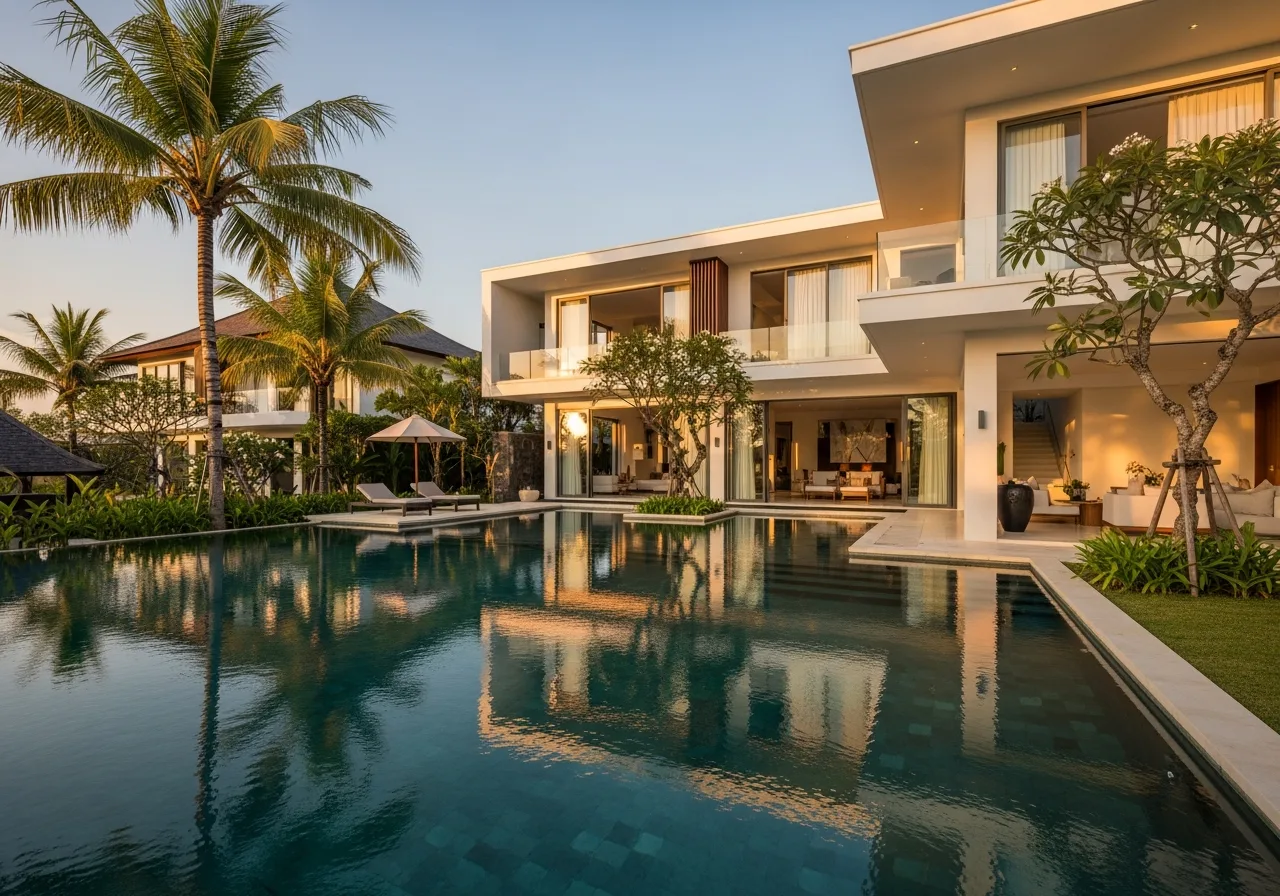
Derawan Land Investment, while not a recognised asset class, operates within Indonesia’s robust real estate market. The national market is projected to reach USD 169.9 billion in 2025, with consistent annual growth of 5-8% through 2030, offering a stable environment for strategic land acquisitions.
Derawan Beachfront Land for Sale 2027: Evaluating Premium Waterfront Plots for Investment
As senior content lead for Derawan Land Investment, our advisory focuses on providing granular intelligence for foreign and domestic investors targeting Indonesia’s coastal property sector. This analysis provides a framework for evaluating premium waterfront plots, specifically within the context of the Derawan region, by leveraging broader Indonesian real estate market trends for 2026–2027.
The Investment Thesis for Coastal Indonesia
Indonesia’s real estate market demonstrates consistent expansion. The total market was valued at USD 100.4 billion in 2025, with projections indicating a rise to USD 156.2 billion by 2034, reflecting a 5.03% Compound Annual Growth Rate (CAGR) from 2026–2034. Other analyses position the market at USD 149.2 billion in 2024, ascending to USD 169.9 billion in 2025, and further to USD 248.7 billion by 2030, at a 7.9% CAGR from 2025–2030. Residential real estate constitutes 58% of this market in 2025, with commercial and industrial sectors accounting for the remainder. This implies an annual growth increment of approximately USD 8–12 billion in national real estate value between 2026 and 2027.
Commercial Real Estate & Land-Linked Opportunities
For land underpinning commercial ventures such as hospitality, retail, or mixed-use developments, the Indonesian commercial real estate market presents specific trends. It was valued at USD 26.88 billion in 2025, reaching USD 28.55 billion in 2026, with a projected growth to USD 39.02 billion by 2031 at a 6.22% CAGR from 2026–2031. Offices represented 39.45% of the commercial market share in 2025, with rentals generating 62% of revenue. Logistics is the fastest-growing commercial subsector, registering a 9.12% CAGR.
Jakarta commands 25.2% of the commercial real estate market; however, the “Rest of Indonesia,” which includes regions like Derawan and other secondary cities, is forecast to grow at a faster rate of 11.22% CAGR through 2031. This accelerated growth outside major urban centres underscores the potential for commercial land value appreciation in tourist-centric coastal areas.
Bali & Tourism-Driven Land Values (2026–2027 Context)
Bali serves as a primary benchmark for tourism-driven land investment in Indonesia due to its established market and data availability. While specific data for Derawan is not separately tracked, Bali’s performance provides a valuable analogue.
- Bali’s real estate market was valued at USD 2.6 billion in 2024, projected to grow to USD 3.1 billion by 2029 at a 4.1% CAGR.
- The residential sector holds 60% of Bali’s market share, with commercial at 25% and hospitality at 15%.
- Bali’s tourism sector saw 5.2 million foreign arrivals in 2023, recovering to 87% of pre-pandemic levels.
- Total foreign arrivals to Indonesia reached 11.7 million in 2023, with a target of 14 million for 2024. This consistent recovery directly influences demand for hospitality and leisure-related land assets.
Land price appreciation in Bali has been substantial. South Bali (Seminyak, Canggu, Uluwatu) recorded annual land price increases of 10–15% from 2018–2023. Prime beachfront land in these areas reached USD 1,500–2,500 per square metre by early 2024. North and East Bali (e.g., Candidasa, Tejakula) saw 5–8% annual increases, with land prices ranging from USD 150–500 per square metre. While Derawan is geographically distinct, these figures illustrate the potential for coastal land value appreciation driven by tourism infrastructure and visitor numbers.
2027 Note
By 2027, the Indonesian government’s continued focus on infrastructure development, particularly in regions designated for tourism growth beyond established hubs, is anticipated to further enhance accessibility and utility of prime coastal plots. This will likely correlate with increased investor interest in areas such as Derawan, leveraging improved transport links and amenities.
Regulatory & Ownership Frameworks for Foreign Investors
Foreign ownership of land in Indonesia is primarily facilitated through specific legal structures:
- Hak Guna Bangunan (HGB) – Right to Build: This right allows foreign-owned companies (PT PMA) to construct and own buildings on state land or land held under Hak Milik (Freehold). The HGB title is typically granted for 30 years, extendable for another 20 years, and renewable for a further 30 years, totalling 80 years. This structure is common for commercial developments like hotels and resorts.
- Hak Pakai (HP) – Right to Use: Foreign individuals can obtain Hak Pakai titles for residential purposes, allowing them to use land for a specific period. This is granted for an initial 30 years, extendable for 20 years, and renewable for another 30 years, also totalling 80 years.
Understanding these mechanisms is crucial for structuring acquisitions in Derawan. Due diligence includes verifying land zoning (e.g., tourism, residential, conservation), environmental impact assessments, and local spatial plans. The Indonesian government has streamlined some permitting processes, but local knowledge remains critical for efficient acquisition and development.
Evaluating Derawan’s Specific Appeal for 2027
While specific Derawan market data is proprietary to local advisors, its appeal rests on distinct attributes:
- Ecological Tourism Focus: Derawan is globally recognised for marine biodiversity, attracting a specific segment of eco-conscious tourists and divers. This niche market supports premium resort and villa developments.
- Developing Infrastructure: Compared to more mature markets like Bali, Derawan’s infrastructure is still developing, offering opportunities for greenfield projects and potentially higher appreciation rates as amenities improve.
- Government Support: Regions like Derawan often benefit from government initiatives aimed at diversifying tourism away from primary hubs, leading to targeted investment in infrastructure and promotion.
Investors should consider the long-term potential for capital appreciation, driven by increasing tourism arrivals to the region and the development of supporting infrastructure. Exit strategies typically involve selling developed properties or the land with an established HGB/HP title to another qualified entity.
Risk Assessment and Due Diligence
Investing in developing coastal regions carries specific risks:
- Environmental Sensitivity: Given Derawan’s marine ecosystem, development must adhere to strict environmental regulations. Non-compliance poses significant legal and reputational risks.
- Regulatory Changes: Indonesia’s property laws, while stable, can undergo amendments. Staying updated on changes affecting foreign ownership and land use is imperative.
- Market Liquidity: While the broader Indonesian market is liquid, specific niche markets like Derawan may have lower liquidity compared to established areas like South Bali, particularly for larger plots.
- Local Community Engagement: Successful projects require respectful and constructive engagement with local communities and authorities.
Thorough due diligence includes title verification, ensuring clear boundaries, confirming zoning compliance, and assessing potential environmental liabilities. Engaging local legal counsel and property advisors is indispensable.
Comparative Investment Landscape for Derawan
A high-level comparison of premium beachfront land investment scenarios in Indonesia:
| Criteria | South Bali (e.g., Canggu) | North/East Bali (e.g., Tejakula) | Derawan (Approximate) |
|---|---|---|---|
| Market Maturity | High | Medium | Low-Medium |
| Land Price/sqm (2024 Approx.) | USD 1,500 – 2,500 | USD 150 – 500 | USD 80 – 300 (Inferred) |
| Tourism Volume | Very High | Medium | Medium (Niche) |
| Infrastructure | Excellent | Good | Developing |
| Development Focus | Luxury residential, hotels, F&B | Eco-resorts, villas, retreats | Eco-resorts, dive centres, private villas |
| CAGR Potential (Land Value) | Stable 10-15% | Stable 5-8% | Potentially higher with development |
| Liquidity | High | Medium | Lower |
The inferred Derawan land prices are indicative and subject to plot-specific attributes, access, and zoning. As a developing market, Derawan offers a different risk-reward profile compared to established Bali locations. The potential for higher percentage capital appreciation exists, but with comparatively lower liquidity and higher development complexities.
For investors seeking premium beachfront land in Derawan for 2027 and beyond, a detailed market entry strategy is essential. This involves understanding the specific plot’s potential, navigating the regulatory landscape, and aligning with the region’s sustainable development goals. Contact Derawan Land Investment to book an investment consultation on WhatsApp and discuss bespoke opportunities tailored to your portfolio objectives.
Continue reading: Derawan Land Investment Opportunities 2027: Under Market Value Deals and Off-Market Finds · Derawan Land Investment Returns 2027: Projecting ROI for Hotel and Villa Developments · Faq