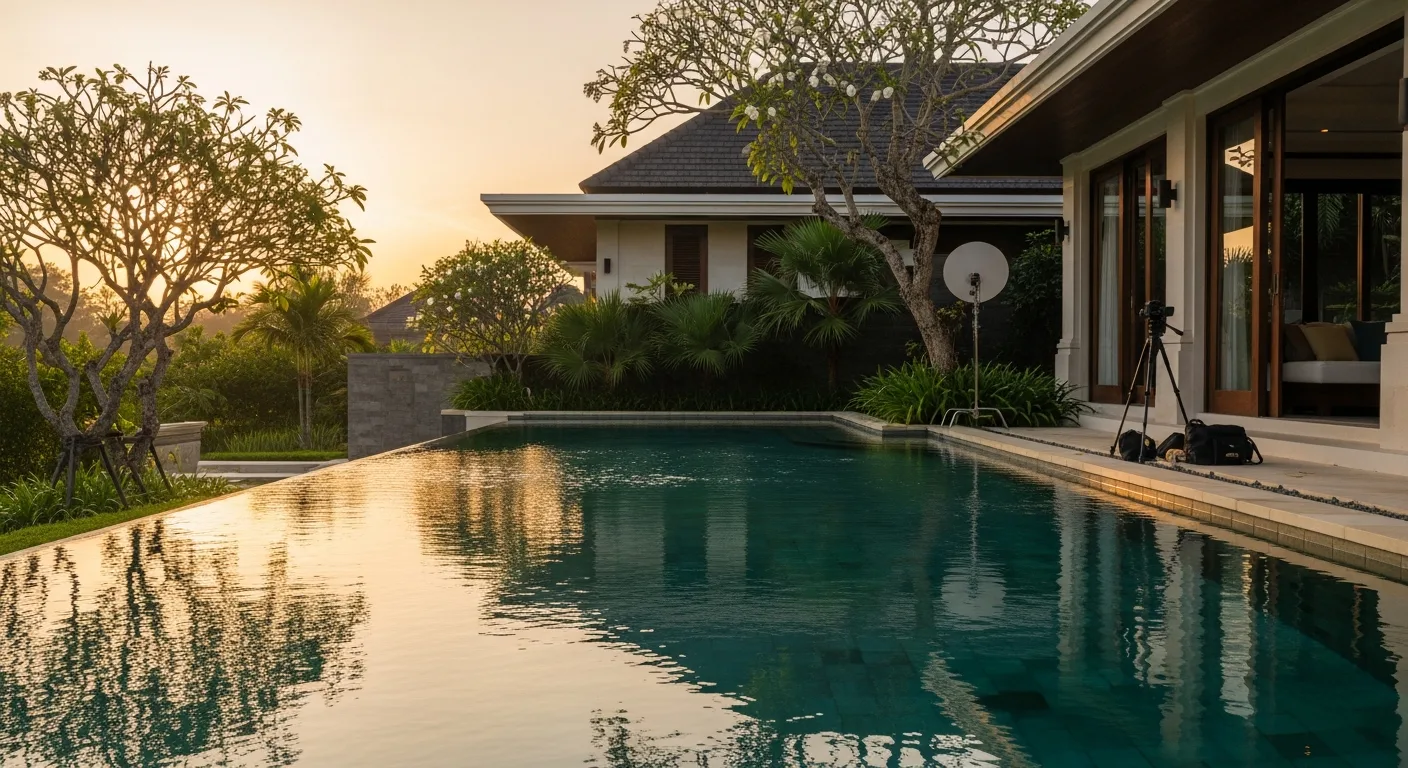
Derawan Island investment packages for 2027 are designed to meet the specific requirements of foreign buyers. While “Derawan Land Investment” is a brand name and not a recognised asset class, the broader Indonesian real estate and land market offers a robust framework, with significant growth projected nationally and in key regions such as Bali and other secondary cities, including Derawan.
Derawan Land Investment: Market Context for 2027
Derawan Land Investment operates within the dynamic Indonesian real estate market. It is important to note that “Derawan Land Investment” is a specific brand or project name and does not represent a distinct, recognised asset class or market segment in Indonesian or Balinese market data for 2025–2026. However, the wider Indonesian real estate and land market provides the fundamental environment in which such an investment would be situated.
Indonesia’s total real estate market was valued at USD 100.4 billion in 2025. Projections indicate growth to USD 156.2 billion by 2034, reflecting a Compound Annual Growth Rate (CAGR) of 5.03% from 2026–2034. Another prominent consultancy estimates the market at USD 149.2 billion in 2024, USD 169.9 billion in 2025, with a forecast of USD 248.7 billion by 2030, representing a 7.9% CAGR from 2025–2030. Residential real estate consistently holds the largest share, approximately 58% in 2025, with commercial and industrial properties comprising the remainder.
These forecasts imply an annual growth in the broader real estate and land market of approximately 5–8% through 2030. This translates to an estimated increment of USD 8–12 billion per year in national real estate value for 2026–2027. This growth trajectory provides a favourable backdrop for land-linked investments, including those on Derawan Island.
Commercial Land-Linked Real Estate in Indonesia
For land underpinning commercial developments such as offices, retail, logistics, hospitality, and mixed-use projects, the Indonesian commercial real estate market demonstrates consistent growth.
- The market was valued at USD 26.88 billion in 2025.
- It is projected to reach USD 28.55 billion in 2026.
- A further increase to USD 39.02 billion by 2031 is anticipated, at a 6.22% CAGR from 2026–2031.
Offices constituted 39.45% of the commercial market share in 2025, with rentals generating 62% of revenue. Logistics is identified as the fastest-growing subsector, with a 9.12% CAGR. While Jakarta accounts for 25.2% of commercial real estate activity, the “Rest of Indonesia”—encompassing regions such as Bali and other secondary cities, including Derawan—is projected for faster growth, at an 11.22% CAGR to 2031. This indicates strong potential for commercial land value appreciation in tourist-centric and developing regions outside major urban centres.
The Role of Tourism in Land Values
Tourism-related real estate and land values are directly influenced by visitor numbers and infrastructure development. Indonesia attracted 9.49 million foreign tourists in 2023. The government’s target for 2024 is 14.3 million foreign tourists, aiming for 17 million by 2025. This growth in tourism directly supports hospitality, retail, and recreational property developments, thereby impacting land values in prime tourist destinations like Derawan Island.
Bali Real Estate & Land Market (2025–2027)
Bali, as a premier tourist destination, offers a relevant comparison for coastal property investments. The Bali property market is expected to grow by 7.37% from 2024 to 2029, resulting in a market volume of USD 12.33 billion by 2029. Residential real estate dominates, with a projected market volume of USD 7.23 billion in 2024. The average transaction value for properties in Bali is USD 1.1 million. The average price per square metre in Bali’s residential market is USD 1,939. These figures provide a benchmark for high-value coastal property investments in Indonesia.
Key Investment Drivers in Bali and Similar Coastal Regions
- Strong Tourism Sector: Consistent growth in international and domestic visitor arrivals underpins demand for accommodation, leisure facilities, and related commercial services.
- Infrastructure Development: Ongoing government investment in airports, roads, and utilities enhances accessibility and attractiveness for both tourists and investors.
- Foreign Ownership Regulations: Evolving regulations designed to attract foreign direct investment in real estate, offering various structures for long-term control and ownership.
- Economic Stability: Indonesia’s sustained economic growth and stable political environment provide a secure investment climate.
Foreign Investment Regulations in Indonesia (2027 Outlook)
Indonesia continues to refine its foreign investment framework to encourage capital inflow. The current regulations permit foreign individuals to own strata title properties, such as apartments and condominiums, provided they are located in designated areas and meet specific value thresholds. For land ownership, foreign investors typically utilise structures such as Hak Guna Bangunan (HGB) or Right to Build, and Hak Pakai (HP) or Right to Use. These rights allow for long-term control over land, typically for 25 to 30 years, renewable for extended periods, effectively providing secure tenure for development and operation.
2027 Note: Expect continued government focus on simplifying foreign investment procedures and potentially expanding eligible property types or regions under Hak Pakai and Hak Guna Bangunan schemes, particularly in strategic tourism zones. The government aims to attract further FDI into tourism infrastructure, which may translate to enhanced land lease or usage terms for significant projects. We anticipate clarity on these potential adjustments throughout 2026, solidifying the landscape for 2027 investments.
For direct land acquisition, foreign entities often establish a Penanaman Modal Asing (PMA) company, a foreign-owned limited liability company, which can then hold freehold title (Hak Milik) to land. This structure is commonly used for larger-scale developments or strategic investments. The specific requirements for PMA establishment, including minimum investment capital and business classifications, are subject to government regulations and can vary.
Derawan Land Investment Packages 2027: Tailored Solutions
Derawan Land Investment offers tailored solutions for foreign buyers, leveraging the growth potential of Indonesia’s real estate market and the specific appeal of Derawan Island. These packages are structured to accommodate various investment profiles, from individual high-net-worth buyers to family offices and institutional funds.
Investment Package Structures
Our packages typically include:
- Long-Term Leasehold Agreements (Hak Pakai / Hak Guna Bangunan): Providing secure, renewable tenure for land use and development, suitable for hospitality, residential, or mixed-use projects.
- PMA Company Formation Assistance: Guidance and support for establishing a foreign-owned company to facilitate direct land acquisition and development under Indonesian law.
- Strategic Land Parcels: Access to prime coastal and development-ready land parcels on Derawan Island, selected for their appreciation potential and suitability for high-value projects.
- Development Advisory: Comprehensive advice on local planning regulations, permitting processes, and sustainable development practices to ensure compliance and project success.
Each package is customised following a thorough consultation to align with the investor’s objectives, risk appetite, and capital allocation strategy. We provide detailed due diligence on all land offerings, including legal status, zoning, and environmental considerations.
Example Investment Scenarios for 2027
| Scenario | Investor Type | Typical Structure | Focus | Expected Tenure |
|---|---|---|---|---|
| Boutique Resort Development | HNW Individual, Family Office | Hak Guna Bangunan via PMA | Luxury hospitality, eco-tourism | 25-30 years (renewable) |
| Private Villa Estate | HNW Individual | Hak Pakai for individual villas | High-end residential, rental income | 25 years (renewable) |
| Commercial Leisure Hub | Investment Fund | PMA for freehold land (Hak Milik) | Mixed-use retail, F&B, recreation | Indefinite (via PMA) |
| Conservation & Tourism Project | Impact Fund, Private Equity | Long-term Hak Pakai lease | Sustainable tourism, environmental preservation | 30 years (renewable) |
These scenarios illustrate the flexibility of our offerings. Derawan Land Investment prioritises transparency and adherence to Indonesian legal frameworks, ensuring secure and compliant investments for our clients.
Conclusion: Investing in Derawan’s Future
Derawan Island presents a compelling investment opportunity within Indonesia’s growing real estate market. With robust national and regional growth forecasts, coupled with specific government initiatives to boost tourism and foreign investment, the conditions are favourable for strategic land-linked acquisitions. Our tailored investment packages for 2027 are designed to navigate the Indonesian regulatory landscape, providing foreign buyers with secure, long-term avenues for capital appreciation and development. We invite serious investors to explore these opportunities further. To discuss specific requirements and available land parcels, book an investment consultation on WhatsApp.
Continue reading: Derawan Land Investment ROI Analysis 2027: Real Costs, Tax Implications, and Holding Period Estimates · Derawan Land Investment Trends 2027: Sustainable Tourism and Marine Ecosystem Growth Projections · Financing Payment