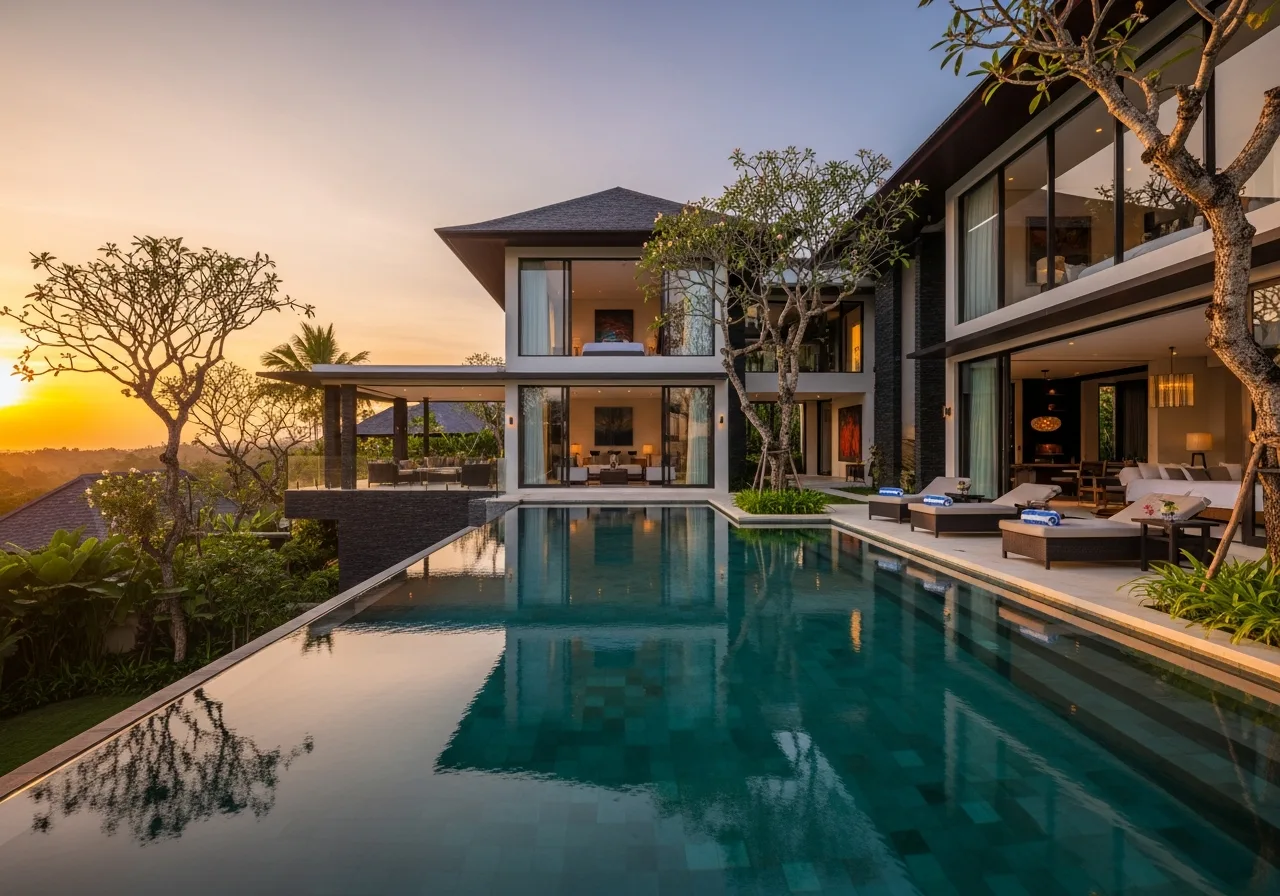
Derawan Land Investment refers to a specific project or brand within the broader Indonesian and Balinese real estate market, not a distinct asset class. Indonesia’s real estate market, valued at USD 100.4 billion in 2025, is projected to grow to USD 156.2 billion by 2034, indicating robust market expansion for land-linked investments.
Derawan Land Investment 2027: Zoning Laws, Utility Access, and Environmental Due Diligence Checklist
As senior content lead for Derawan Land Investment, our advisory focuses on providing precise, actionable intelligence for investors considering coastal properties in Indonesia, particularly within the Derawan region. This briefing outlines critical considerations for 2027 regarding zoning, utility infrastructure, and environmental due diligence.
Indonesia Real Estate & Land Market Overview (2025–2027)
The broader Indonesian real estate market provides the contextual framework for any regional land investment. Indonesia’s total real estate market was valued at USD 100.4 billion in 2025, with projections indicating growth to USD 156.2 billion by 2034, at a 5.03% Compound Annual Growth Rate (CAGR) from 2026–2034. Another prominent consultancy estimates the market at USD 149.2 billion in 2024, rising to USD 169.9 billion in 2025, with a projection of USD 248.7 billion by 2030 at a 7.9% CAGR from 2025–2030. Residential real estate consistently holds the largest share, approximately 58% in 2025, with commercial and industrial sectors comprising the remainder.
Reconciling these forecasts, the prevailing sentiment for 2025–2030 suggests annual growth in the wider real estate and land market of approximately 5–8%. This implies an increment of roughly USD 8–12 billion per year in national real estate value for 2026–2027, underscoring a dynamic environment for land appreciation.
Commercial Land-Linked Real Estate Outlook (2025–2027)
For land designated for commercial development, including offices, retail, logistics, hospitality, and mixed-use projects, specific market dynamics apply.
- Indonesia’s commercial real estate market size was USD 26.88 billion in 2025, projected to reach USD 28.55 billion in 2026, and USD 39.02 billion by 2031 at a 6.22% CAGR from 2026–2031.
- Offices constituted 39.45% of the commercial market share in 2025, with rentals accounting for 62% of revenue. Logistics is identified as the fastest-growing subsector, demonstrating a 9.12% CAGR.
- Jakarta represents 25.2% of commercial real estate activity; however, the “Rest of Indonesia,” encompassing Bali and other secondary cities, is projected to grow faster at an 11.22% CAGR to 2031.
This context is directly relevant for investors in Derawan coastal properties, as commercial land values in tourist-centric regions are influenced by broader hospitality and retail sector growth. The higher growth trajectory for regions outside Jakarta indicates strong potential for land value appreciation in areas like Derawan.
Bali-Specific Real Estate & Land Investment Context
While specific “Derawan” market data is not tracked separately, Bali serves as a crucial proxy due to its similar tourism-driven economic model and coastal characteristics.
Bali Land Prices (2025–2026)
Land prices in Bali exhibit significant regional variation, driven by tourism density, infrastructure, and zoning. As of Q4 2025, average land prices in prime southern Bali locations (e.g., Canggu, Seminyak, Uluwatu) ranged from approximately IDR 1.5 billion to IDR 2.5 billion per are (100 sqm). Secondary locations and emerging areas (e.g., Tabanan, Gianyar, North Bali) typically ranged from IDR 300 million to IDR 800 million per are. These figures reflect freehold title (Hak Milik) values; leasehold (Hak Sewa) prices are discounted accordingly.
Bali Rental Yields & Occupancy (2025–2026)
The Bali hospitality sector directly impacts land viability for resort or villa development. Average rental yields for villas in prime locations were approximately 6–10% in 2025, with high-end properties potentially exceeding this. Occupancy rates recovered significantly post-pandemic, averaging 65–80% for well-managed properties in 2025. This performance supports the commercial viability of land-based hospitality ventures.
Bali Investment Forecast (2026–2027)
Foreign Direct Investment (FDI) into Indonesia, including Bali, reached USD 49.3 billion in 2024, a 14% increase from 2023. This trend is expected to continue, with a focus on tourism infrastructure and sustainable development. Infrastructure projects such as improved road networks and potential airport expansions outside Denpasar are expected to drive land value appreciation in previously underserved regions. The government’s emphasis on digital nomad visas and long-term stays also supports sustained demand for residential and commercial land for rental accommodations.
2027 Note on Permitting
For 2027, investors should anticipate continued streamlining of the Online Single Submission (OSS) system for business permits, but also increased scrutiny on environmental impact assessments (AMDAL) for coastal developments. Early engagement with local planning authorities (Dinas Tata Ruang) is essential to confirm the most current spatial plan (Rencana Tata Ruang Wilayah – RTRW) applicable to a specific land parcel, as these plans are subject to periodic review and amendment.
Zoning Laws and Spatial Planning in Indonesia (2027)
Understanding zoning (Rencana Tata Ruang Wilayah – RTRW) is fundamental for any land investment in Indonesia. The RTRW is a legally binding spatial plan that dictates land use at national, provincial, and regency levels. For Derawan coastal properties, the relevant RTRW will be issued by the local regency (Kabupaten Berau, East Kalimantan) and must align with provincial and national directives.
Key Zoning Classifications for Coastal Areas:
- Kawasan Pariwisata (Tourism Zone): Designated for hotels, resorts, villas, and supporting tourism infrastructure. These zones typically have specific density and height restrictions.
- Kawasan Permukiman (Residential Zone): For private residences, often with lower density requirements than tourism zones.
- Kawasan Konservasi (Conservation Zone): Strict restrictions on development, often prohibiting any construction to protect natural ecosystems (e.g., mangroves, coral reefs, turtle nesting sites).
- Kawasan Pertanian (Agricultural Zone): Primarily for farming; conversion to other uses is challenging and often requires special permits.
- Kawasan Lindung (Protected Zone): Similar to conservation zones, but may include areas for watershed protection or disaster mitigation.
Investors must obtain a zoning certificate (Informasi Tata Ruang) for any prospective land parcel to confirm its designated use. Development that deviates from the RTRW is subject to penalties and potential demolition orders.
Utility Access and Infrastructure (2027)
Access to reliable utilities significantly impacts development costs and project viability, particularly in more remote coastal areas like Derawan.
Electricity:
Electricity supply in Indonesia is managed by PLN (Perusahaan Listrik Negara). Availability and capacity vary. For larger developments, a dedicated substation or significant grid connection upgrades may be required, incurring substantial costs and lead times. Investors should verify existing grid capacity and the cost of connection for their specific location.
Water:
Access to potable water is critical. Sources include municipal pipelines (PDAM), boreholes/wells, or rainwater harvesting. Coastal areas often face challenges with saltwater intrusion into aquifers, necessitating desalination plants for large-scale developments, which are costly to install and operate.
Waste Management:
Solid waste management remains a challenge in many parts of Indonesia. Investors must budget for private waste collection and disposal, or establish on-site waste treatment facilities, adhering to environmental regulations.
Telecommunications:
Mobile network coverage (4G/5G) is generally good in developed areas, but fibre optic internet access may be limited in remote coastal regions. Satellite internet is an alternative but comes at a higher cost.
A detailed infrastructure assessment is paramount during due diligence to estimate connection costs and timelines accurately.
Environmental Due Diligence Checklist for Coastal Properties
Environmental considerations are critical for coastal land investments, particularly in ecologically sensitive areas like Derawan. Regulatory compliance and sustainable practices mitigate risks and enhance long-term value.
Key Environmental Due Diligence Items:
| Category | Specific Checks | Compliance/Risk |
|---|---|---|
| Spatial Planning | Verify RTRW classification. | Ensure development aligns with designated land use. |
| Protected Areas | Proximity to National Parks, Marine Protected Areas, mangrove forests. | Strict development restrictions; potential for no-build zones. |
| Erosion Risk | Coastal erosion studies, historical shoreline changes. | Impacts building stability, land area; requires mitigation. |
| Water Quality | Salinity tests for groundwater, proximity to pollution sources. | Affects potable water supply, environmental permits. |
| Biodiversity | Presence of endangered species habitats (e.g., turtle nesting sites, coral reefs). | Triggers specific environmental regulations and conservation efforts. |
| Waste Management Plan | Local capacity for waste disposal, on-site treatment requirements. | Environmental permit condition; operational cost. |
| AMDAL/UKL-UPL | Requirement for Environmental Impact Assessment (AMDAL) or Environmental Management and Monitoring Efforts (UKL-UPL). | Mandatory for most developments; complex and time-consuming process. |
| Disaster Risk | Tsunami risk, seismic activity, flood zones. | Building codes, insurance implications, site selection. |
| Community Impact | Impact on local livelihoods (e.g., fishing, traditional uses). | Social license to operate, potential for disputes. |
Engaging local environmental consultants for a comprehensive study is advisable to navigate the complexities of Indonesian environmental regulations and ensure project sustainability.
Derawan Land Investment provides granular insights into these critical areas, ensuring our clients make informed decisions regarding their coastal property portfolios in Indonesia. For a detailed discussion on specific opportunities and to conduct a thorough pre-investment analysis, book an investment consultation on WhatsApp with our advisory team.
Continue reading: Critical Mistakes to Avoid When Buying Derawan Land for Investment in 2027 · Derawan Beachfront Land for Sale 2027: Evaluating Premium Waterfront Plots for Investment · Roi Yield Analysis