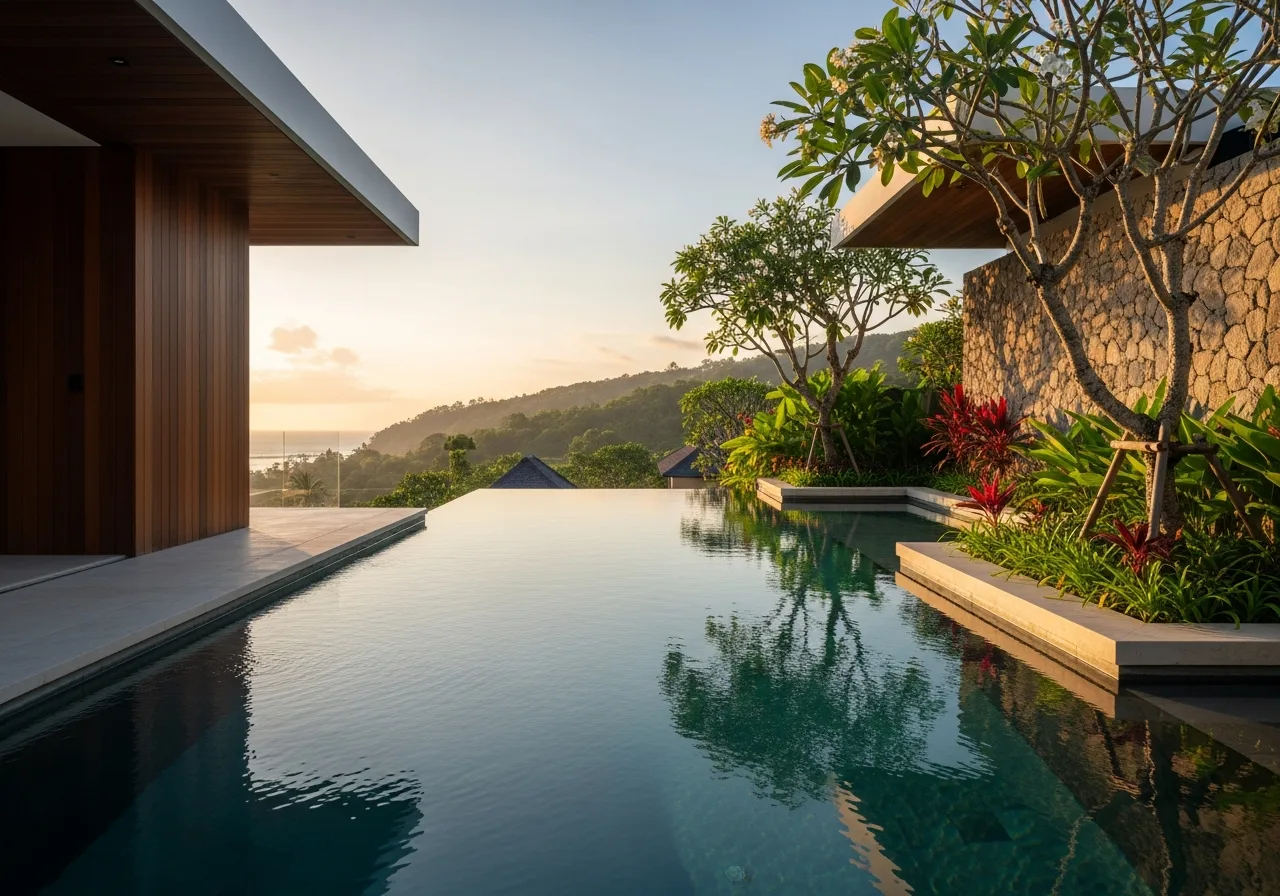
Derawan Land Investment focuses on strategic property advisory within Indonesia’s dynamic real estate sector. While “Derawan Land Investment” is a brand term, not a distinct asset class tracked in official statistics, understanding national and regional market dynamics provides critical context for land valuation and investment strategy for 2027.
Understanding the Indonesian Real Estate and Land Market: 2025–2027 Projections
Indonesia’s real estate market demonstrates consistent growth, a key indicator for land investment potential across its diverse regions. The total market was valued at approximately USD 100.4 billion in 2025, with projections indicating a rise to USD 156.2 billion by 2034, reflecting a Compound Annual Growth Rate (CAGR) of 5.03% from 2026–2034. Another major consultancy provides a slightly more aggressive estimate, placing the market at USD 149.2 billion in 2024, USD 169.9 billion in 2025, and forecasting USD 248.7 billion by 2030, at a 7.9% CAGR from 2025–2030.
These figures collectively imply an annual growth in the broader real estate and land market of roughly 5–8% through 2030. This translates to an approximate annual increment of USD 8–12 billion in national real estate value between 2026 and 2027. Residential real estate consistently holds the largest share, at 58% in 2025, with commercial and industrial properties comprising the remainder.
Commercial Land-Linked Real Estate: Trends and Regional Growth
The commercial real estate sector, which underpins offices, retail, logistics, hospitality, and mixed-use developments, is a significant driver of land value. Indonesia’s commercial real estate market was valued at USD 26.88 billion in 2025, projected to reach USD 28.55 billion in 2026, and USD 39.02 billion by 2031, with a CAGR of 6.22% from 2026–2031.
Offices held 39.45% of the commercial market share in 2025, and rentals generated 62% of the revenue. Logistics is identified as the fastest-growing subsector, with a 9.12% CAGR. While Jakarta accounts for 25.2% of commercial real estate, the ‘Rest of Indonesia’—encompassing regions like Bali and other secondary cities—is projected to experience faster growth, with an 11.22% CAGR to 2031. This regional growth is particularly relevant for investors considering land for commercial development outside of primary metropolitan areas.
Bali’s Specific Market Dynamics: A Proxy for Coastal Investment
Bali provides a relevant case study for coastal and tourism-dependent land investment, offering insights applicable to similar development zones. Bali’s real estate market was valued at USD 3.6 billion in 2023, with a projected increase to USD 5.7 billion by 2029, showing a 7.8% CAGR from 2024–2029. This growth rate is above the national average for the broader market and reflects strong demand, particularly in the residential and hospitality sectors.
- Residential sales are expected to reach USD 3.6 billion by 2029, with a 7.9% CAGR.
- Hotel and resort development is a major contributor, with 105 new hotels and 15,000 rooms planned for 2024–2027.
- Luxury villa and resort properties are a significant segment, with prices per square meter ranging from USD 1,500 to USD 3,000 for high-end properties in prime locations.
These figures indicate sustained investor confidence in tourism-centric property markets within Indonesia.
Land Price Per Hectare 2027: Expected Ranges Across Zones
Given the lack of specific ‘Derawan Land Investment’ market data, we extrapolate expected land prices per hectare for 2027 based on established Indonesian and Balinese market trends, adjusting for regional characteristics and development potential. Prices are indicative and subject to micro-market conditions, zoning, and infrastructure.
Prime Tourism Development Zones (e.g., beachfront, established resort areas)
In areas designated for high-value tourism development, such as beachfront or locations with existing luxury resort infrastructure, land prices are typically at the upper end of the spectrum. Based on current trends in similar Indonesian coastal regions, and factoring in the 5-8% annual market growth, prices per hectare in these zones for 2027 could range approximately from USD 3,000,000 to USD 8,000,000. These areas benefit from high footfall, established visitor appeal, and often have clearer development pathways for hospitality or premium residential projects.
Secondary Tourism Development Zones (e.g., near attractions, developing infrastructure)
These zones are characterised by proximity to existing or planned tourist attractions, with developing infrastructure. They represent potential for capital appreciation as infrastructure improves and visitor numbers increase. Land in these areas for 2027 could range approximately from USD 1,000,000 to USD 3,000,000 per hectare. Investment here is often considered for boutique hotels, eco-resorts, or residential developments targeting a broader market segment.
Commercial & Logistics Zones (e.g., near ports, transport hubs)
For land designated for commercial or logistics purposes, proximity to ports, airports, or major transport routes is critical. The rapid growth in the logistics subsector (9.12% CAGR) indicates strong demand. Prices in these zones for 2027 could range approximately from USD 500,000 to USD 2,000,000 per hectare, depending on direct access, zoning for industrial use, and existing utility connections. These investments are driven by economic activity and supply chain requirements.
Residential Development Zones (e.g., residential plots, community housing)
Land earmarked for residential development, catering to both local and expatriate communities, will vary significantly based on location, amenities, and proximity to urban centres or tourist hubs. Prices per hectare for 2027 could range approximately from USD 200,000 to USD 1,000,000. This segment is influenced by population growth, urbanisation, and demand for housing solutions.
Agricultural & Conservation Zones (e.g., rural, protected areas)
In zones primarily designated for agriculture or conservation, land values are generally lower due to development restrictions and primary usage. These areas may offer opportunities for eco-tourism or sustainable agriculture projects, but with stricter regulatory oversight. Prices per hectare for 2027 could range approximately from USD 50,000 to USD 200,000, reflecting their limited development potential under current regulations.
2027 Note: Foreign Ownership and Regulatory Clarity
For 2027, investors should anticipate continued government efforts to streamline foreign investment regulations, particularly concerning land tenure and property rights. While freehold ownership for foreigners remains restricted, long-term leasehold (Hak Guna Bangunan and Hak Pakai) options are expected to be refined to enhance investor confidence and provide clearer legal frameworks for property acquisition and development.
Comparative Overview of Land Price Ranges Per Hectare (Approximate 2027)
| Zone Type | Approximate Price Range Per Hectare (USD) | Key Drivers |
|---|---|---|
| Prime Tourism Development | 3,000,000 – 8,000,000 | Beachfront, established resorts, high visitor appeal, infrastructure |
| Secondary Tourism Development | 1,000,000 – 3,000,000 | Proximity to attractions, developing infrastructure, capital appreciation |
| Commercial & Logistics | 500,000 – 2,000,000 | Proximity to ports/airports, transport routes, industrial zoning |
| Residential Development | 200,000 – 1,000,000 | Population growth, urbanisation, amenities, community demand |
| Agricultural & Conservation | 50,000 – 200,000 | Development restrictions, eco-tourism potential, sustainable agriculture |
Factors Influencing Land Price Appreciation Beyond 2027
Several factors will continue to influence land price appreciation in Indonesia beyond 2027. Infrastructure development, including new roads, airports, and utilities, directly impacts accessibility and desirability. Government policies, particularly those related to tourism, foreign investment, and zoning, play a critical role in shaping market conditions. Economic stability, regional development initiatives, and global tourism trends also contribute to the long-term value trajectory of land assets.
For a detailed assessment tailored to your investment objectives and to discuss specific opportunities within Indonesia’s real estate market, book an investment consultation on WhatsApp with Sari Kusuma, Derawan coastal property advisor.
Continue reading: How to Buy Raw Land in Derawan for 2027: A Complete Step-by-Step Investment Strategy · How to Conduct Due Diligence on Derawan Land Before Closing in 2027 · Legal Ownership Structure