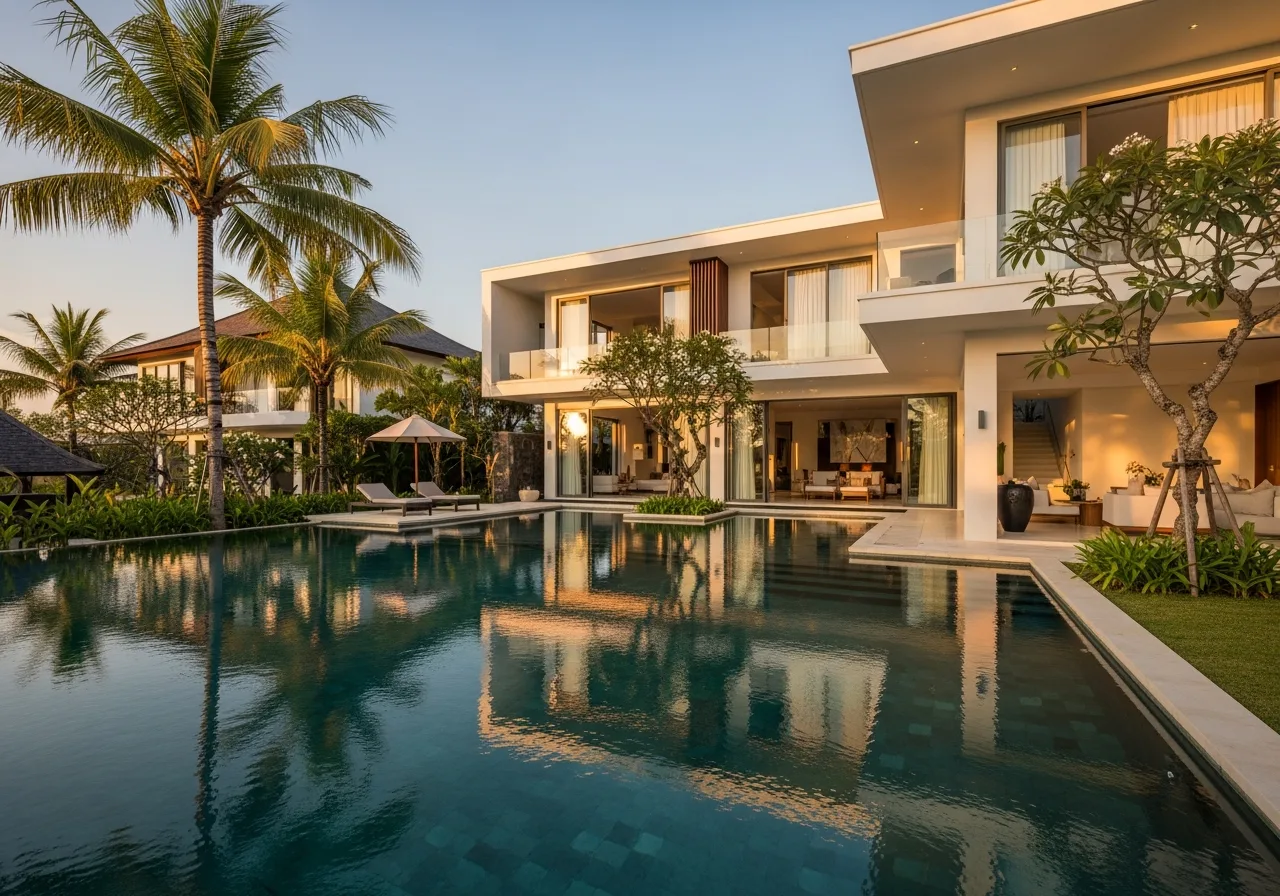
Derawan Land Investment, as a specific market segment, is not a recognized asset class in Indonesia’s 2025–2026 real estate data. This guide addresses the broader Indonesian and Balinese land and real estate environment relevant to such an investment in 2027.
Indonesia Real Estate & Land Market Overview (2025–2027)
Indonesia’s real estate market demonstrates consistent growth, making it a relevant consideration for foreign investment. The total market was valued at USD 100.4 billion in 2025, with projections indicating an increase to USD 156.2 billion by 2034, reflecting a 5.03% Compound Annual Growth Rate (CAGR) from 2026–2034. Other analyses estimate the market at USD 149.2 billion in 2024, rising to USD 169.9 billion in 2025, and potentially reaching USD 248.7 billion by 2030, at a 7.9% CAGR from 2025–2030.
Residential real estate constitutes the largest segment, holding a 58% market share in 2025. Commercial and industrial properties account for the remaining proportion. These forecasts collectively suggest an annual growth in the wider real estate and land market of approximately 5–8% through 2030. This implies an approximate annual increment in national real estate value of USD 8–12 billion during 2026–2027.
Commercial Land-Linked Real Estate (2025–2027)
For investors focused on land underpinning commercial developments such as offices, retail, logistics, hospitality, and mixed-use projects, the Indonesian commercial real estate market presents distinct figures:
- 2025 Market Size: USD 26.88 billion
- 2026 Market Size: USD 28.55 billion
- 2031 Projected Market Size: USD 39.02 billion (6.22% CAGR from 2026–2031)
Offices held 39.45% of the commercial market share in 2025, with rentals generating 62% of revenue. Logistics is identified as the fastest-growing subsector, with a 9.12% CAGR. Jakarta accounts for 25.2% of commercial real estate activity, but the ‘Rest of Indonesia’ (encompassing regions such as Bali and other secondary cities) is projected to experience faster growth, with an 11.22% CAGR to 2031. This accelerated growth outside the capital suggests increasing opportunities for commercial land value appreciation in tourist-centric and developing regions.
Bali Real Estate & Land Market Specifics (2025–2027)
Bali’s real estate market operates within this broader national context but exhibits unique characteristics driven by tourism and expatriate demand. While specific ‘Derawan land investment’ figures are not tracked, Bali’s general market performance provides relevant insights.
Bali’s Market Dynamics
- Growth Drivers: Tourism recovery, digital nomad influx, and infrastructure improvements (e.g., new roads, airport expansions) are primary drivers.
- Property Types: Villas, resorts, and hospitality-linked land remain dominant investment categories. Residential land, particularly in established expatriate areas, maintains demand.
- Regional Variance: South Bali (Seminyak, Canggu, Uluwatu) continues to command higher land prices. North and East Bali are emerging, offering lower entry points with potential for appreciation as infrastructure develops.
- Land Price Trends: Land prices in prime Balinese locations have historically shown resilience and appreciation, influenced by limited supply and consistent demand. Specific data on ‘Derawan land investment’ is not available, but general Bali land values are expected to track the national commercial real estate growth in key tourist zones.
2027 Note
By 2027, the Indonesian government’s continued focus on attracting foreign direct investment (FDI) in tourism and infrastructure is expected to further solidify legal frameworks for foreign property ownership, particularly through PT PMA structures, enhancing clarity for investors seeking long-term land control. This will be critical for land-intensive projects.
Foreign Ownership of Land in Indonesia: Freehold Titles
Foreign individuals cannot directly own freehold land (Hak Milik) in Indonesia. However, foreign investors can secure long-term control over land through specific legal structures. The primary mechanisms are:
1. Hak Pakai (Right to Use)
- Definition: This grants an individual the right to use land for a specified period, typically 30 years, extendable for another 20 years, and then a further 30 years, totalling 80 years.
- Eligibility: Available to foreign individuals domiciled in Indonesia and foreign legal entities.
- Scope: Can be registered for residential or commercial purposes. It is a robust right, allowing construction and use of the land.
2. PT PMA (Foreign Investment Company)
- Definition: A foreign-owned company established under Indonesian law. This is the most common and secure route for foreign investors to acquire substantial land rights.
- Land Rights Available to PT PMA:
- Hak Guna Bangunan (HGB – Right to Build): Grants the right to construct and own buildings on state land or land owned by another party for a period, typically 30 years, extendable for 20 years, and then a further 30 years (total 80 years). This is effectively a long-term leasehold.
- Hak Guna Usaha (HGU – Right to Cultivate): Grants the right to use state land for agricultural, plantation, or husbandry purposes, typically for 35 years, extendable for 25 years, and then a further 35 years (total 95 years).
- Hak Pakai (Right to Use): As described above, also available to PT PMAs.
- Advantages: Provides a clear legal entity for investment, allows for ownership of buildings, and provides long-term control over land. Offers greater flexibility for larger-scale developments and commercial ventures.
3. Nominee Agreements (Cautionary Note)
Historically, informal nominee agreements (where an Indonesian citizen holds the Hak Milik title on behalf of a foreigner) were common. These are legally unenforceable and carry significant risks, including potential forfeiture of the land. Derawan Land Investment strongly advises against such arrangements due to the lack of legal protection for the foreign investor.
Derawan Land Investment Context
While ‘Derawan Land Investment’ is a brand, not a market segment, the principles of land acquisition and foreign ownership apply consistently across Indonesia, including regions like Derawan. Investors considering land in such locations must structure their acquisitions through PT PMA for commercial projects or Hak Pakai for individual use to ensure legal security and long-term control. The growth projections for ‘Rest of Indonesia’ commercial real estate, specifically the 11.22% CAGR to 2031, indicate potential for capital appreciation in developing tourist regions outside Jakarta.
Understanding the specific land zoning (e.g., green zone, yellow zone) is paramount, as this dictates permissible land use and construction. Due diligence on land certificates, ownership history, and local regulations is a critical preliminary step for any land investment in Indonesia.
Investment Considerations & Due Diligence
Foreign investors must undertake thorough due diligence before committing to any land acquisition in Indonesia. Key areas include:
- Legal Verification: Confirming the validity and authenticity of land certificates (SHM, HGB, Hak Pakai).
- Zoning Regulations: Ensuring the intended use of the land aligns with local spatial plans (Rencana Tata Ruang Wilayah – RTRW). Green zones (zona hijau) are protected and generally cannot be developed.
- Permits and Licenses: Understanding the requirements for building permits (IMB/PBG) and other operational licenses.
- Environmental Impact: Assessing any environmental regulations or potential impact assessments required for development.
- Local Community Engagement: Understanding local customs and engaging with community leaders can facilitate smoother project execution.
- Tax Implications: Consulting with tax advisors on property taxes, transfer taxes, and corporate taxes for PT PMAs.
Indonesia’s legal framework for land ownership, while distinct from many Western jurisdictions, offers clear pathways for foreign control through established structures. By adhering to these legal mechanisms and conducting rigorous due diligence, foreign investors can secure their land interests effectively.
For detailed guidance on structuring your investment or for specific project advice relevant to Derawan or other coastal properties, book an investment consultation on WhatsApp with Derawan Land Investment advisors.
Continue reading: Maximizing Returns on Derawan Land in 2027: Strategies for Subdivision and Eco-Tourism Development · The Future of Derawan Land Value 2027: Predicting Demand from Global Eco-Tourists and Investors · Market Trends 2027