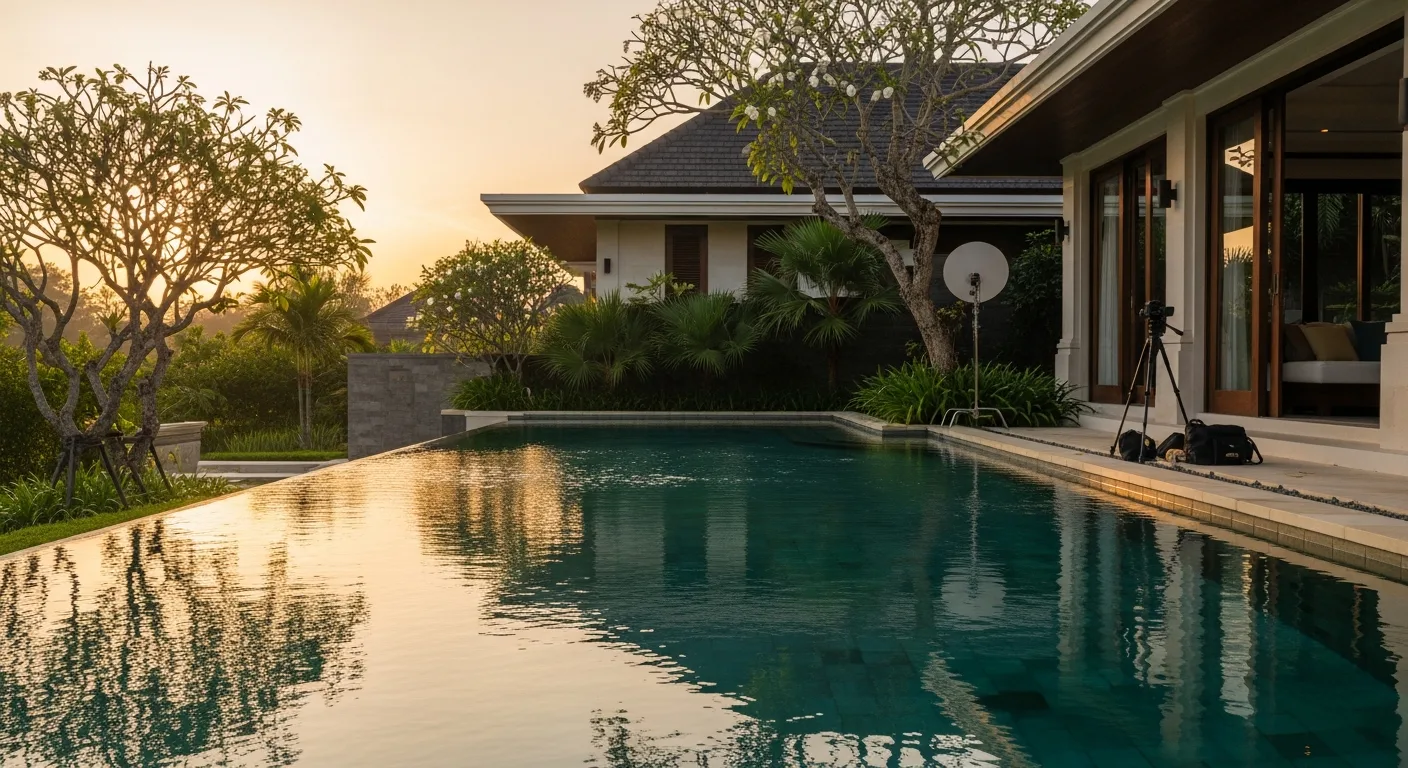
Derawan Land Investment refers to a specific brand or project, not an established asset class in Indonesia. This briefing provides a 2026–2027 overview of the broader Indonesian and Balinese real estate and land market, within which such an investment would operate, focusing on regulatory adaptations concerning marine ecosystem protection.
Derawan Land Investment 2027: Adapting to New Regulations on Marine Ecosystem Protection
The term “Derawan Land Investment” does not correspond to any recognized, distinct asset class or named market segment in Indonesia or Bali in current 2025–2026 data. It appears to be a brand/project name or marketing term rather than an official category tracked in market statistics. This briefing provides a factual 2026–2027 land and real estate investment overview for Indonesia and Bali, the environment in which such a project would operate, focusing on the implications of evolving marine ecosystem protection regulations.
1. Indonesia Real Estate & Land Market Overview (2025–2027)
Indonesia’s total real estate market was valued at USD 100.4 billion in 2025, with projections indicating a rise to USD 156.2 billion by 2034, reflecting a 5.03% Compound Annual Growth Rate (CAGR) from 2026–2034. Another major consultancy estimates the market at USD 149.2 billion in 2024, USD 169.9 billion in 2025, with projections reaching USD 248.7 billion by 2030 at a 7.9% CAGR from 2025–2030. Residential real estate consistently dominates the market, holding approximately 58% market share in 2025, with commercial and industrial properties comprising the remainder.
Reconciling these forecasts, the broader real estate and land market in Indonesia is expected to experience annual growth of approximately 5–8% through 2030. This implies an annual increment in national real estate value of roughly USD 8–12 billion during 2026–2027.
2. Commercial Land-Linked Real Estate Dynamics
For land underpinning commercial developments such as offices, retail, logistics, hospitality, and mixed-use projects, the Indonesian commercial real estate market is projected to grow from USD 26.88 billion in 2025 to USD 28.55 billion in 2026, reaching USD 39.02 billion by 2031 at a 6.22% CAGR from 2026–2031. Offices constituted 39.45% of the commercial market share in 2025, with rentals accounting for 62% of revenue. Logistics is identified as the fastest-growing subsector, demonstrating a 9.12% CAGR.
Jakarta accounts for 25.2% of commercial real estate activity, but the “Rest of Indonesia,” which includes regions such as Bali and other secondary cities, is projected to exhibit faster growth at an 11.22% CAGR to 2031. This trend is significant for land investors, indicating potential for commercial land value appreciation in tourism-centric and developing regional areas.
3. Bali Real Estate & Land Investment Outlook (2026–2027)
Bali’s real estate market maintains its position as a primary investment destination within Indonesia, driven by sustained tourism and foreign investment. The island saw a 20% year-on-year increase in foreign tourist arrivals in Q1 2024 compared to Q1 2023, with over 1.3 million international visitors. This consistent demand underpins land values, particularly in prime coastal and cultural tourism zones. Property sales in Bali increased by 15% in 2023 compared to 2022, with prices for prime land in areas like Canggu and Uluwatu appreciating by an approximate 8–12% annually in recent years. Land leases, particularly for commercial hospitality ventures, remain a prevalent investment structure, offering flexibility and mitigating direct land ownership complexities for foreign entities.
The average price for freehold land in prime South Bali areas ranged from USD 800–1,500 per square meter in late 2024. Leasehold land rates varied significantly based on location, term, and zoning, with annual prices from USD 50–200 per square meter for long-term leases (25+ years). Demand for luxury villas and boutique resorts continues to outstrip supply in specific sought-after locations, contributing to sustained land appreciation in these areas.
4. Regulatory Landscape: Marine Ecosystem Protection (2027 Note)
Indonesia’s commitment to marine ecosystem protection is intensifying, with new regulations and enforcement frameworks expected to be fully implemented by 2027. These regulations will specifically impact coastal development, marine tourism operations, and any land-based projects with potential runoff or visual impact on designated marine protected areas (MPAs). Investors must conduct thorough due diligence regarding environmental impact assessments (EIAs) and ensure compliance with updated spatial planning laws that delineate protected zones. The Ministry of Marine Affairs and Fisheries (KKP) is expected to strengthen its oversight, particularly concerning coral reef health and mangrove conservation. Projects in proximity to sensitive marine environments will face increased scrutiny and potentially require more extensive mitigation measures, influencing development timelines and costs.
5. Environmental Impact Assessments (EIAs) and Spatial Planning
The Indonesian government, through agencies such as the Ministry of Environment and Forestry (KLHK) and the KKP, continues to refine its environmental impact assessment (EIA) processes. For 2026–2027, projects located in coastal zones or near protected marine areas will face heightened scrutiny. Developers must demonstrate robust environmental management plans, including strategies for waste management, wastewater treatment, and adherence to building codes designed to minimise ecological footprints. Spatial planning regulations, particularly those under the Coastal Zone and Small Islands Management Law, dictate permissible development types and densities. Investors must verify that any prospective land acquisition aligns with these detailed spatial plans (Rencana Tata Ruang Wilayah – RTRW and Rencana Zonasi Wilayah Pesisir dan Pulau-Pulau Kecil – RZWP3K) to avoid future legal complications or project delays.
6. Sustainable Development and Investment Opportunities
The increasing focus on sustainability presents both challenges and opportunities for investors. Projects incorporating eco-friendly designs, renewable energy sources, and robust waste management systems are likely to gain faster regulatory approval and may qualify for government incentives. There is growing demand for properties that integrate environmental responsibility, appealing to a segment of the market willing to pay a premium for sustainable living and tourism experiences. Opportunities exist in:
- Eco-resorts and responsible tourism ventures.
- Investments in marine-friendly infrastructure and technologies.
- Land banking in areas designated for sustainable development.
- Projects that contribute to local community empowerment and conservation efforts.
| Year | Total Market Size (USD Billion) | Commercial Market Size (USD Billion) | Annual Growth (Approximate) |
|---|---|---|---|
| 2025 | 100.4 – 169.9 | 26.88 | 5-8% |
| 2026 | 105.4 – 183.5 | 28.55 | 5-8% |
| 2027 | 110.7 – 198.2 | ~30.3 | 5-8% |
7. Conclusion: Strategic Adaptation for Coastal Investments
Investing in coastal land in Indonesia, particularly in regions like Derawan, requires a strategic approach that acknowledges the evolving regulatory landscape concerning marine ecosystem protection. While the broader Indonesian real estate market demonstrates robust growth, success in coastal areas hinges on meticulous due diligence, adherence to environmental compliance, and a commitment to sustainable development practices. Proactive engagement with local regulations and a focus on projects that align with conservation objectives will be crucial for long-term value creation and operational viability in 2027 and beyond.
For bespoke advice on navigating these investment opportunities and regulatory frameworks, book an investment consultation on WhatsApp.
Continue reading: The Ultimate Beginner’s Guide to Buying Undeveloped Land in Derawan for 2027 Investors · Cost Breakdown of Investing in Derawan Land 2027: From Purchase Price to PT PMA Setup Fees · Risk Mitigation